Ask anyone who has lived in La Cienega through a few autumns when the valley closes down for the season, and you'll get the same answer: after the Harvest Festival, sometime in October, when El Rancho de las Golondrinas locks up for winter. That's the story everyone tells. It's also not quite true, and the gap between the story and the reality is worth knowing if you actually live here, because right now, in September 2026, one of the valley's three fall destinations has already changed its rules for the season, and the other two never followed the same calendar to begin with.
La Cienega doesn't have one fall season. It has three, stacked within a few miles of each other along Los Pinos Road and Paseo Real, and each one answers to a different authority. Confusing them is how you end up driving out on a Saturday to find a trail closed, a gate locked, or a walk you'd planned for next month no longer possible.
Three Places, Three Rulebooks
Here's what's actually governing access to the valley's three big fall draws this year:
| Destination | Who sets the rules | This fall |
|---|---|---|
| Santa Fe Harvest Festival, El Rancho de las Golondrinas | The museum, two fixed dates | October 3 and 4, 2026, tickets online only |
| Leonora Curtin Wetland Preserve | The museum's operating season, managed day-to-day by the Santa Fe Botanical Garden | Season runs through October 23, 2026, but part of the property is currently closed |
| La Cieneguilla Petroglyph Site | The Bureau of Land Management, federal public land | Open year-round, no ticket, no season |
Three separate institutions, three separate sets of rules, and none of them coordinate with each other. That's not an oversight. It reflects what these places actually are: a private nonprofit museum running a living-history calendar, a botanical preserve operating under a lease inside that museum's season, and a stretch of federal land that answers to neither.
The Festival Doesn't Move
The Harvest Festival is the one fixed point. This year it lands on October 3 and 4, running 10 a.m. to 4 p.m. both days, and the museum's own site is explicit that tickets go through HoldMyTicket.com only. Cash isn't accepted at the gate. Space caps exist and some festival weekends sell out, so if you're planning to go, buying ahead isn't just convenience, it's the only way in on a full day.
What you'll find once you're through the gate hasn't changed much in five decades, and that's the point. Grape stomping at the old winery, chile ristra crafting, corn husk demonstrations, a hayride for kids, and a look at how a New Mexico ranch actually processed a harvest before refrigeration existed. The museum's director of operations, Sean Paloheimo, has said the dirt still visible on the pumpkins is intentional. Kids ask about it every year, and the answer is the whole lesson: that's where food actually comes from.
The festival itself is fixed. Everything around it is not.
The Marsh Has Its Own Season, and This Year an Asterisk
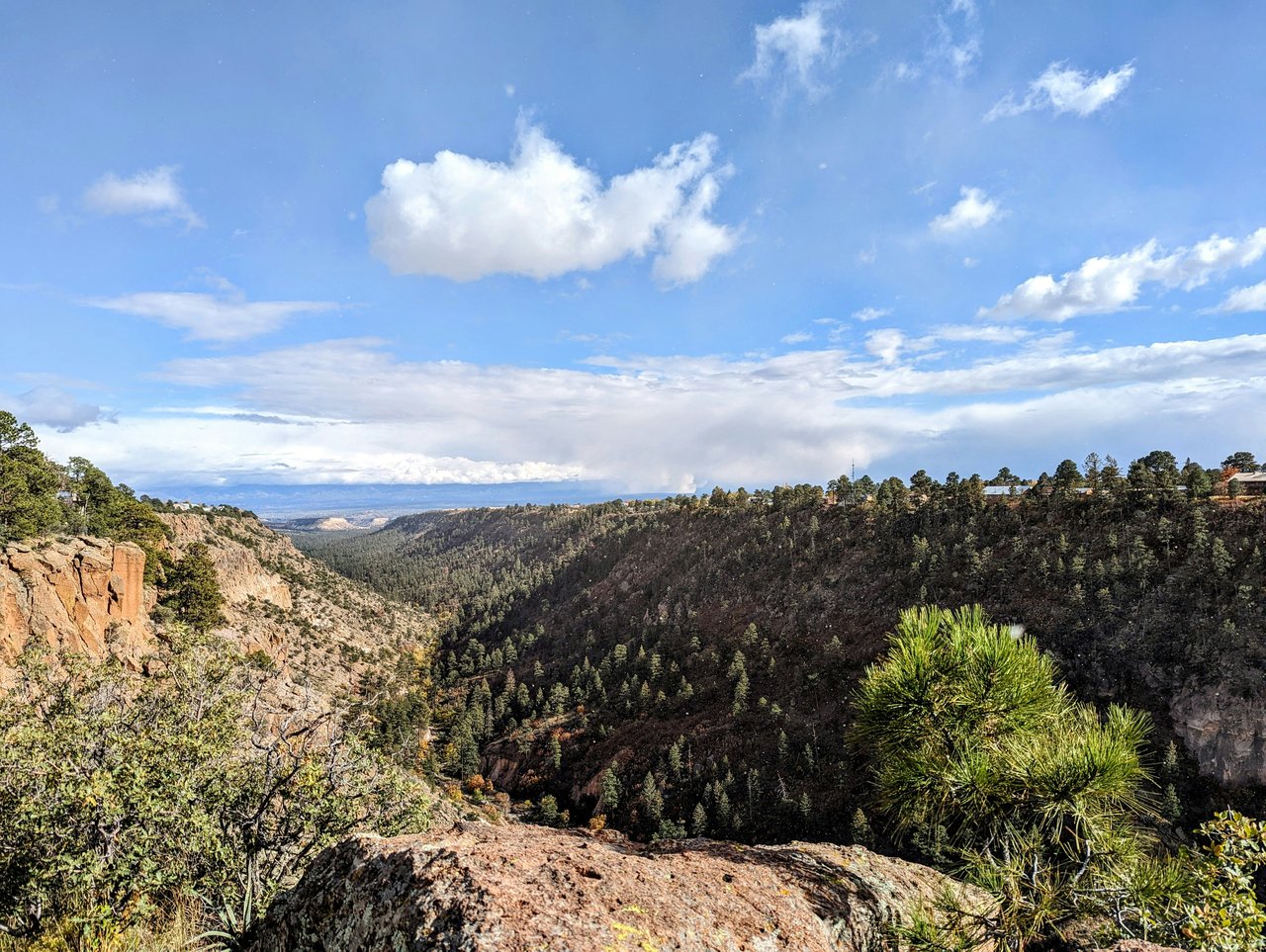
The Leonora Curtin Wetland Preserve sits behind the main ranch property, a 35-acre spring-fed marsh that the Santa Fe Botanical Garden has spent years restoring, pulling invasive species and revegetating habitat along a rare cienega in the middle of high desert. It's a genuinely different landscape than the ranch itself, riparian and shaded where the museum grounds are open and sunbaked, and the loop trail through it runs about 2.2 miles with a gentle 160 feet of elevation gain, an easy walk by any measure.
Access to it isn't separate from the museum. It's bundled into museum admission, which means the wetland's open season is the ranch's open season, and this year that runs through October 23. Miss that window and the preserve isn't available again until the museum reopens in June.
Here's the wrinkle specific to this fall. The ranch's own site currently notes that the far side of the property, past the creek, is closed because of increased bear activity, with no reopening date posted. The wetland's marsh is fed by springs on the same watershed that runs through that part of the property, so anyone counting on that loop this month should check the current notice before driving out. A trail that's technically still in season isn't the same as a trail that's currently open.
Air quality is worth a glance too. Recent wildfire activity in the region has been affecting conditions on and off, and the museum has flagged it directly on its own site as something to plan around before a visit.
The One Place With No Gate At All
Down Paseo Real, a few miles from the museum, sits the one piece of this fall puzzle that doesn't answer to anyone's calendar. The La Cieneguilla Petroglyph Site is federal land managed by the Bureau of Land Management, and it's open every day of the year, no ticket, no admission fee, no seasonal closure.
A 1991 archaeological survey recorded more than 4,400 images carved into the basalt cliffs above the Santa Fe River, most of them attributed to Keresan-speaking Pueblo people who lived in the area between the 13th and 17th centuries. Hump-backed flute players and bird figures dominate the panels, and the site sits directly along the historic route of the Camino Real de Tierra Adentro, the same road that once carried travelers between Mexico City and Santa Fe.
The trail itself is a short but real scramble, roughly a mile round trip over loose rock and basalt boulders, better suited to sturdy shoes than sandals. There have been rattlesnake sightings reported at the site, and the BLM's own guidance asks visitors to stay off the panels entirely, no touching, no chalking, no rubbings, since the carvings are both fragile and federally protected.
It's not dramatic and it's not curated. It's also the one fall destination in La Cienega that a closure notice or a season calendar can't touch.
Why the Valley Runs This Way
None of this is coincidence. La Cienega has functioned as a stopping point on the Camino Real since the late 1600s, when Spanish settlers established a paraja, an official rest stop, in what was already a lush valley fed by springs and acequias. Governor Juan Bautista de Anza is recorded stopping his expeditionary force at what's now the ranch in 1780. The property passed through generations of the Vega y Coca family before falling into disuse, until Leonora Scott Muse Curtin and her daughter bought it in 1932, and Curtin's husband, a Finnish businessman known as Y.A. Paloheimo, spent the 1940s reimagining it as a living museum. It opened to the public in 1972.
That history is why the ranch operates like a cultural institution with a seasonal calendar rather than a park with a gate that's always open. The wetland preserve exists because the Botanical Garden built a conservation partnership around the same springs that made this valley worth stopping at in the first place. And the petroglyph mesa predates all of it by centuries, carved by people who were here long before any road had a name, which is part of why federal law treats it differently than a private museum ever could.
Three institutions, three timelines, one valley. That's not a flaw in how La Cienega runs. It's the shape the place has always had.
Before You Go
- Buy Harvest Festival tickets online in advance. The gate is cashless and popular dates have sold out in past years.
- If the wetland loop is on your list, go before October 23 and check the ranch's current site notice first, since part of the property is closed right now for bear activity.
- The petroglyph mesa is available any day, any season, no ticket required, but wear real shoes and watch your footing on the rock scramble.
- Check current air quality before heading out, especially for the wetland trail, given recent wildfire activity in the region.
The valley rewards people who know its rhythms, and those rhythms don't all move at the same speed. Living here long enough teaches you which gate opens when, and which one never really closes at all.
For those thinking further ahead, whether that means understanding how a property near the Ranch or along the Camino Real corridor holds its value, or simply wanting a conversation with someone who tracks this valley closely, Darlene Streit and her team welcome the chance to talk. Request a private consultation whenever the time feels right.