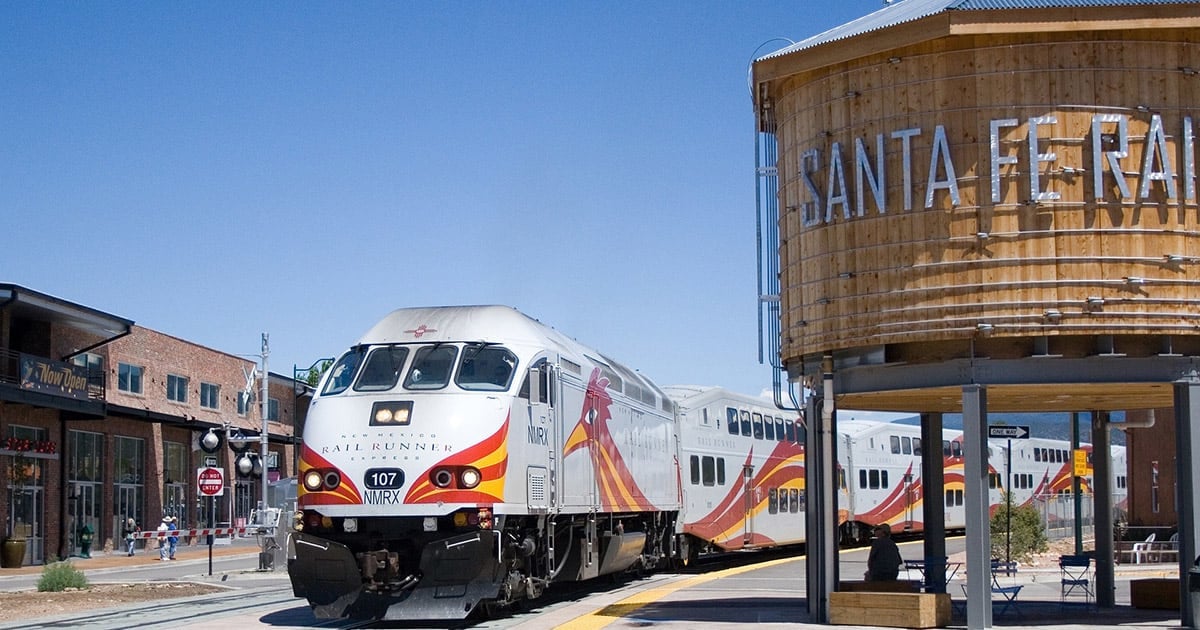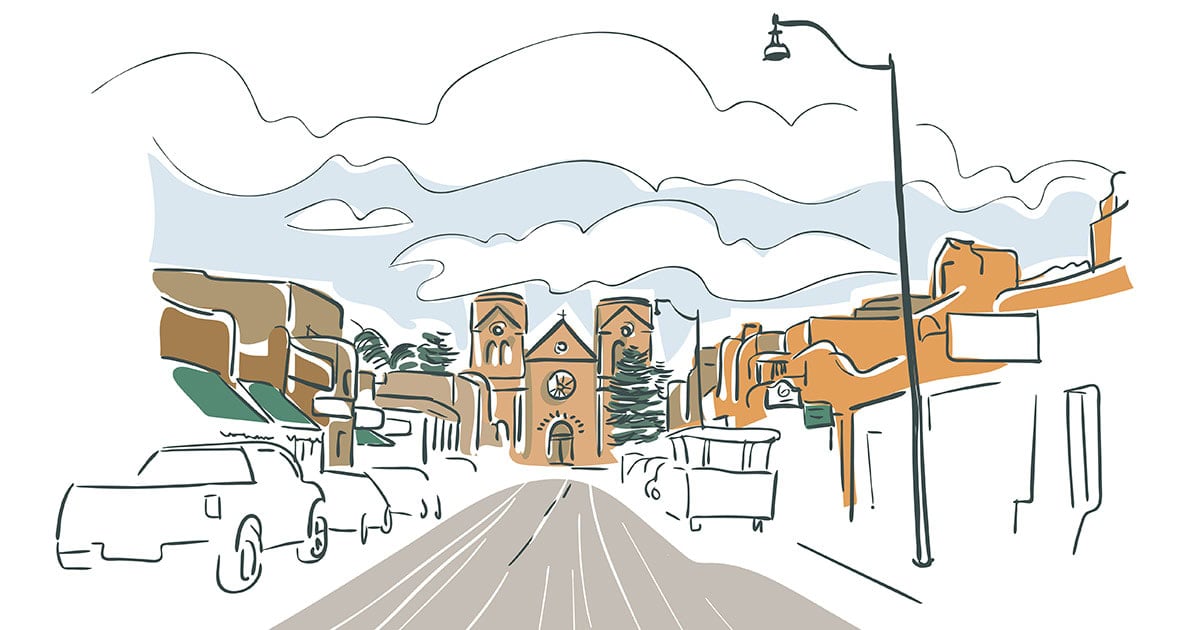
Walk into the Farmers' Market Pavilion on a Saturday morning and you will believe you understand the Railyard. The produce tables run deep, the chile smell hits you before you're through the door, and by 9 a.m. it is standing room only around the bread stalls. That is the neighborhood most people know, and it is real. But it is also only one of two schedules running through this district at the same time, and the second one does not wait for you to notice it.
Two blocks away, on the same weekend, Blue Rain Gallery might be hosting a glass blowing demonstration with an artist whose work sells in museum shops from Seattle to Santa Fe. SITE Santa Fe might be three weeks from closing an exhibition that took a year to build. None of that shows up if you only ever cross Guadalupe Street on your way to buy squash.
That is the thing about the Railyard that a Saturday-morning routine hides from you: the market side of the district runs on a weekly clock that resets every seven days forever, and the gallery side runs on a calendar that opens and closes on its own terms, often within a single week, sometimes within a single afternoon. If your relationship with this neighborhood begins and ends at the produce stalls, you are experiencing about half of what the Railyard actually offers, and the half you're missing does not repeat.
The Market Clock: Reliable, and Not What You Think It Is
The Santa Fe Farmers' Market at the Pavilion runs Saturdays year-round from 8 a.m. to 1 p.m., with a seasonal Tuesday market from May through December on the same schedule. It is managed by Debbie Burns, and it draws close to 150 vendors of fresh produce, meats, cheeses, baked goods, and prepared food, all sourced from a defined radius of New Mexico counties.
Here is the part residents tend to miss. Sunday is not a smaller repeat of Saturday. It is a different market entirely. The Railyard Artisan Market takes over the same Pavilion from 10 a.m. to 3 p.m. every Sunday, and it is curated for makers rather than growers: hand-knit goods, watercolor landscapes, teas, body care products. It operates under the Farmers' Market's oversight but with its own jury and its own rotating vendor list, which means the Sunday crowd sees a genuinely different lineup week to week. Treating Sunday as a quieter version of Saturday means skipping an entire program built around local craftspeople rather than local farms.
The market clock is dependable. It will be there next Saturday and the Saturday after that. That dependability is exactly why it is easy to mistake for the whole neighborhood.
The Gallery Clock: It Closes Whether You Show Up or Not
The Railyard Arts District surrounds the market on both sides, and it does not run on a weekly loop. It runs on exhibition dates, and those dates are unforgiving.
Right now, SITE Santa Fe is showing Indian Theater: Native Performance, Art, and Self-Determination Since 1969, curated by Candice Hopkins, running from June 5 through September 7, 2026. The show has ties to the Institute of American Indian Arts and to a 1969 treatise first published in Santa Fe, which makes its presence here something closer to a homecoming than a touring exhibition passing through. As of this month, there are roughly three weeks left before it closes. After September 7, this particular show will not be at SITE again.
The same week, Blue Rain Gallery ran a compressed two-day program that illustrates how tight this calendar actually is. On one day: an artist lecture with glass artist Preston Singletary, a Native American Art Group Exhibition, and a Thoma Collection Q&A with photographer Will Wilson. The next day: a painting demonstration by Jesse Littlebird, followed by glass blowing demonstrations featuring Singletary alongside Dan Friday and Spooner Marcus. Across the courtyard, Sibylle Szaggars Redford Fine Art opened We'ma: we, an exhibition of Zuni fetish carvings, on that same first day.
None of that repeats next week. A Tourism Santa Fe piece on the district put it plainly, quoting a Railyard voice who said, "You won't find another center quite like it anywhere else in the country." That is a fair claim about the density of what happens here, but density is only useful to you if your visits are timed to catch it.
Two Clocks, Side by Side
Market Clock | Gallery Clock | |
|---|---|---|
Recurrence | Weekly, indefinitely | Show-specific, dated |
Saturday | Farmers' Market, 8am-1pm, ~150 vendors | Gallery hours, rotating exhibitions |
Sunday | Railyard Artisan Market, 10am-3pm, curated makers | Often quiet, check individual gallery hours |
What you miss by skipping a week | Nothing, it repeats | An exhibition or event that will not return |
Current example | Next Saturday's market will look similar | SITE's current show closes September 7, 2026 |
The market side forgives you for showing up late. The gallery side does not.
What a Local Week Actually Looks Like Right Now
If you live within walking distance of the Pavilion, the next few weeks give you a real test of whether you've been seeing half the neighborhood or all of it. The Farmers' Market and the Railyard Artisan Market will run exactly as they always do. What will not wait is SITE's current exhibition, which closes in early September, and the string of single-date gallery events that come and go through the Arts District on a schedule closer to a concert calendar than a retail one.
A few names worth knowing if you're building out that second half of your routine:
- Blue Rain Gallery, which hosts a steady rotation of artist lectures, demonstrations, and group exhibitions, often announced with only a few weeks' notice
- Sibylle Szaggars Redford Fine Art, currently showing Zuni fetish carvings under the title We'ma: we
- SITE Santa Fe, whose current show closes September 7, 2026, with the next major exhibition, the 13th SITE SANTA FE International Biennial curated by Ekow Eshun, not opening until summer 2027
- The Thoma Collection, which pairs its exhibitions with artist and curator conversations rather than static viewing
- The Railyard Artisan Market, the Sunday counterpart to Saturday's farmers market, worth treating as its own destination rather than an overflow crowd
Where the Two Clocks Meet: What You Eat In Between
The connective tissue between market mornings and gallery evenings is the food, and here the Railyard has built something more specific than a generic restaurant row. Zacatlán, run by Chef Eduardo Rodriguez, was named Best New Restaurant by the James Beard Foundation and draws on Rodriguez's roots in Zacatecas alongside the ingredients found two blocks away at the market. Whoo's Donuts, next door to ChocolateSmith, has built a following on scratch-made flavors that lean into New Mexico ingredients like chile and brown sugar rather than standard glazes. Radish & Rye works farm-inspired plates around one of the better small-batch bourbon lists in the region. Second Street Brewery's green chile cheeseburger uses chile sourced from the market itself, which means the food side of the Railyard is not separate from the market clock at all. It is downstream of it.
The Actual Takeaway
The Railyard's reputation as a Saturday farmers market with some shops attached is not wrong, it is just incomplete, and the incompleteness has a shelf life. A market habit tells you almost nothing about what is currently showing at SITE, what Blue Rain has scheduled this month, or which single-weekend event just came and went while you were choosing between two kinds of squash. The neighborhood rewards residents who check both calendars, not just the one that happens to repeat.
If you already live here, the useful move this month is small: pick one gallery event or exhibition you have never been to and go before it closes. The market will still be there next Saturday. The show might not be.
If the Railyard's mix of daily rhythm and cultural density has you thinking about what it would mean to live even closer to it, the Darlene Streit Team knows this district block by block, from which galleries time their openings around the market crowd to which corners stay quiet after the vendors pack up. Request a private consultation when you're ready to talk about what living inside both of the Railyard's clocks actually looks like.